- English

Choosing LED lighting for a Greenhouse
Selecting the right LED lighting for a greenhouse is more than just a matter of energy savings—it directly impacts plant growth, yield, and overall efficiency. With a wide range of LED options available, growers need to understand how factors like light spectrum, intensity, and placement can make the difference between thriving crops and underwhelming results.
Key Considerations for Growers
When growers first choose an LED supplier, they should expect their potential supplier to have a good understanding of their project and expectations. The supplier would have studied their specific case and not give them a standardized solution. The proposed lighting solution must be adapted to the growers’ needs and location: they should receive a good technical proposal with the right quantity of light needed & light spectrum adapted to the crops and support in the integration of the lighting system in the overall system.
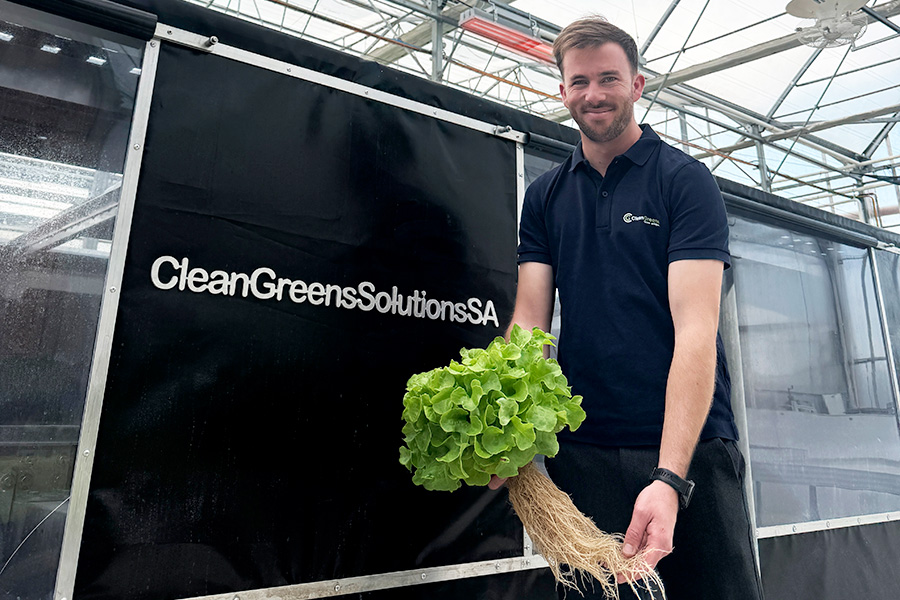
“RED Horticulture met all these requirements as the project in question is to be able to grow lettuces all year round, maintaining the same quality in summer with natural light, as in wintertime with the support of LEDs” Says Basile Giroud, Agronomic Engineer of CleanGreens
The first objective that RED Horticulture focused on for CleanGreens was to maintain a similar cycle time and yields while maintaining high quality. The next step was to optimize the entire system to exceed expectations and increase yields per m2 while controlling energy consumption. But what about the plant’s life?
Improving The Plant’s Life
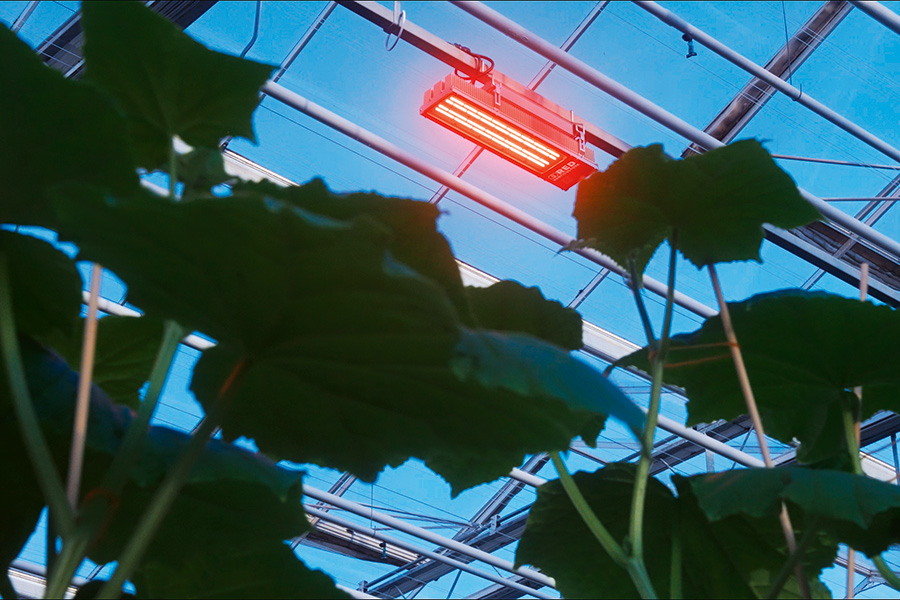
The new RED T luminaires are more efficient and stronger lights. (Spoiler: that’s how we, CleanGreens, upgraded part of our demo system!). These not only make the demo environment more convincing for visitors but could also be used experimentally to try out new plant species.
“Our primary goal is truly agronomic: CleanGreens’ production with the GREENOVA AEROponics system is very specific; the plants are constantly moving and several crop stages are located side by side.” Says Romain Le Gléau, Photobiologist at RED Horticulture
This is where the photobiology experts at RED Horticulture (such as Romain Le Gléau ) use the 4-channel dynamic lighting solution to individually create recipes catering to all requirements of the crops. They program the LED lights carefully and analyze the crops, life stages, plant requirements to create a specific lighting strategy that suits all stages.
Reducing Energy Consumption And Environmental Impact
RED Horticulture offers its customers the Smart Dimming functionality that allows customers to achieve optimal energy savings. Smart Dimming, integrated into the MyREDTM software platform, is RED’s technology that dynamically adjusts LED lighting in real time based on sunlight, climate data and energy services. By optimizing power use across zones and shifting to the most efficient light spectra, it ensures the right light at the right time for the crop while enhancing photosynthesis, saving energy and maintaining crop balance.
“With this seamless system we won precise control over both crop development and energy efficiency, no matter the climate.” Says Basile Giroud, Agronomic Engineer of CleanGreens
The Journey To The Perfect Lighting Partnership
CleanGreens Solutions wants to deliver the freshest products, grown in the healthiest way to hold sustainability and profitability to a higher standard. That is where we met mission and vision of RED Horticulture. The two companies have been working closely together for four years to better understand the impact of lettuces production under LEDs during winter.
“In collaboration with RED Horticulture’s agronomy team, numerous trials were conducted on CleanGreens’ site on a large number of varieties, allowing us to create a substantial knowledge base.” Says Basile Giroud, Agronomic Engineer of CleanGreens
This helped them understand certain limiting factors and optimize lettuce cultivation. Recently, to accelerate this collaboration, trials were conducted at PARC* with seeds supplied directly by CleanGreens. The results of the first trial have just been released with them and are very exciting. Based on the initial results obtained, a second trial has just been launched at PARC.
(*) PARC is the Photobiology and Agronomy Research Center of RED Horticulture in Nantes, France where multiple trials are conducted to understand various plant species better, create tailored lighting strategies and enable growers worldwide to optimize their cultivation process and energy saving.
What to Expect from Greenhouse Lighting in the Coming Years
In the coming years, dynamic spectra will continue to outpace fixed-spectrum lighting, driven by the rising demands of growers, crops and global food production. The integration of AI-powered software with climate and energy systems will be central, enabling real-time optimization that balances crop needs with sustainable energy use. At the same time, crop-specific light recipes, combined with advances in seed and variety development, will push the boundaries for ever more precise lighting strategies. Above all, sustainability and efficiency will be key, supporting year-round production while minimizing environmental impact.
RED Horticulture is already at the forefront of these advancements, with its groundbreaking MyRED software intelligence, driving innovation and efficiency in crop lighting and sustainability.