- English

Sustainability, resource conservation and regional sourcing are three pillars that will form the foundation for the future in the green industry. In order to cultivate plants optimally, important prerequisites must be created, whether for professional or private cultivation. Soil condition plays a particularly important role here.
A humus-rich, well-aerated soil with good water retention is necessary to optimize plant growth.
Environmental stressors such as drought, heavy rain, and wind have a negative impact. These extreme conditions significantly weaken plants and, consequently, food security in the agricultural sector. Therefore, it is essential to mitigate these influences. Only healthy soil can produce healthy food.
This is exactly where wood fiber comes into play, offering a variety of benefits. Water retention, soil aeration, and nutrient supply are its hidden strengths. Wood fibers can be worked into the soil, where they store moisture that is made available to plants. Their structure allows them to form fine capillaries that can also bring oxygen into the soil. Not only do plant roots need oxygen, but so does the soil microbiome, which is essential for maintaining soil structure. These properties are also desirable in pot cultivation in order to promote healthy root growth.
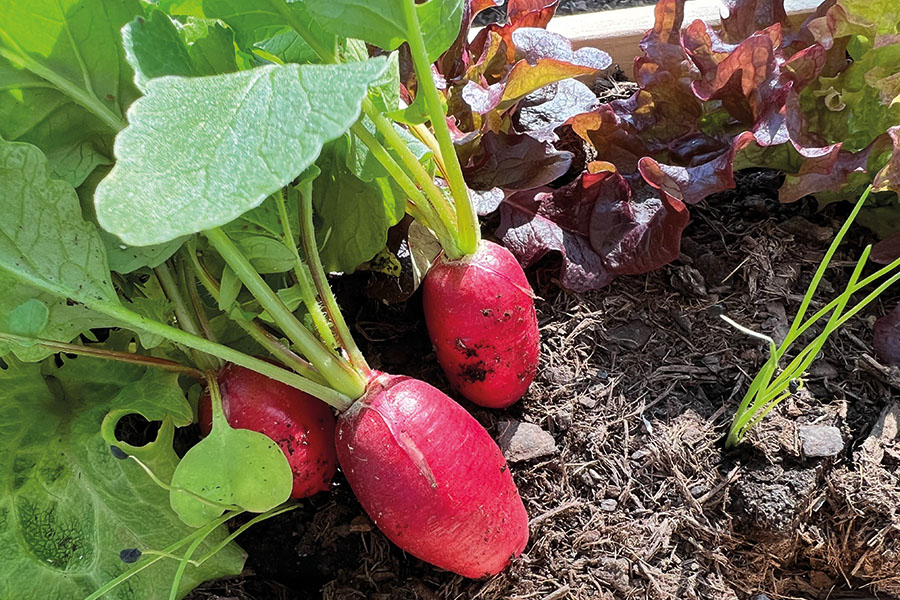
Substrates containing wood fibers can also retain water and dissolved nutrients more effectively, extending irrigation intervals. In practice, this means less frequent watering is required. Even if the surface of pots or beds appears dry, it may not always be necessary to water them. A closer look at the root zone is therefore essential. Thanks to advanced technology, optimal measurement and monitoring solutions are now available.
Using wood fiber as mulch on existing surfaces protects against evaporation and can save up to 20% of irrigation water. Mulching with wood fiber also positively affects soil stability in the face of wind and heavy rain. Using wood fiber to improve and mulch the soil enables it to absorb and retain more water during heavy rainfall.
Not all wood fiber is the same. Technologies from ANDRITZ enable the production of wood fibers from various raw materials. One important source of these materials is the overflow from composting processes. This material accumulates in large quantities and is enriched with microorganisms from the composting process, resulting in a more positive impact. In the test series mixing compost with wood fibers produced excellent results.
The simple installation and easy operation of plants enable a wide range of uses in terms of the raw materials and the resulting fibers. Climate change, supply chain reliability, and environmental considerations – coupled with resource minimization – require swift action.
The collaboration between ANDRITZ, with its ingenious fiber production technologies, and producers in the green industry enables a successful response to environmental challenges and new requirements.
Klaus Wenzel, Master Gardener & Expert