- English

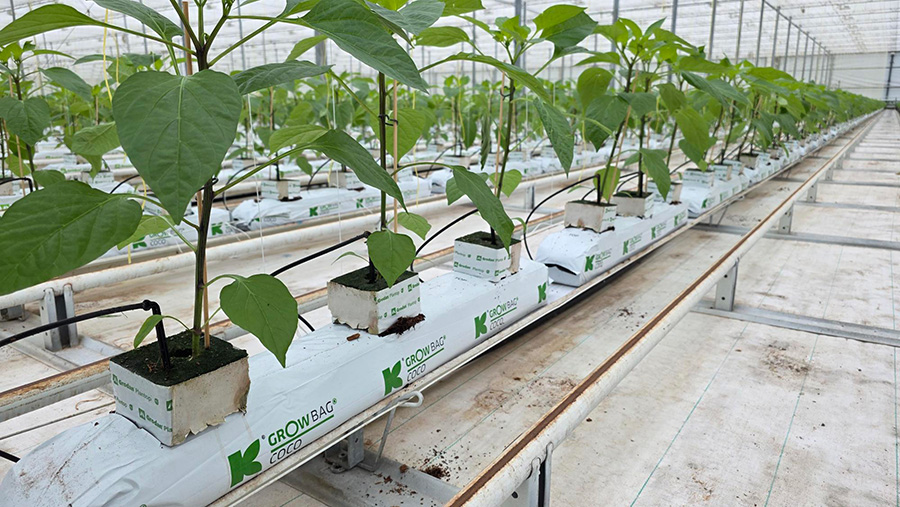
In professional horticulture, substrate choice has become a strategic decision. Growers are balancing agronomic performance with supply security, technical performance and increasing sustainability expectations. Within this evolving landscape, coir-based growbags remain a central cultivation method for fruiting vegetables and soft fruit production.
The new range of Growbag COCO from Klasmann-Deilmann represents a technically refined and carefully sourced solution within this segment. Rather than introducing a fully new concept – as recently done with their Growbag ADVANCED based on woodfibre -, the company here continues to build on established coir cultivation practices, placing particular emphasis on customised coir blends for different crops and requirements but also on high-quality raw materials from own manufacturing and consistency in the production process.
For many growers, the difference between coir products lies not in the material itself, but in how it is prepared and blended. Chemically, growers can select between washed, unwashed or buffered material depending on crop sensitivity and fertigation strategy. While unwashed or standard washed coco is widely used for crops such as tomato and pepper, experience shows that more delicate crops, including strawberry, often benefit from RHP certified buffered coir raw materials. Moreover, Klasmann-Deilmann’s premium raw material Shakti Amla®, a pH stabilised coir, provides another innovative constituent to reach an additional level of stability and yield performance.
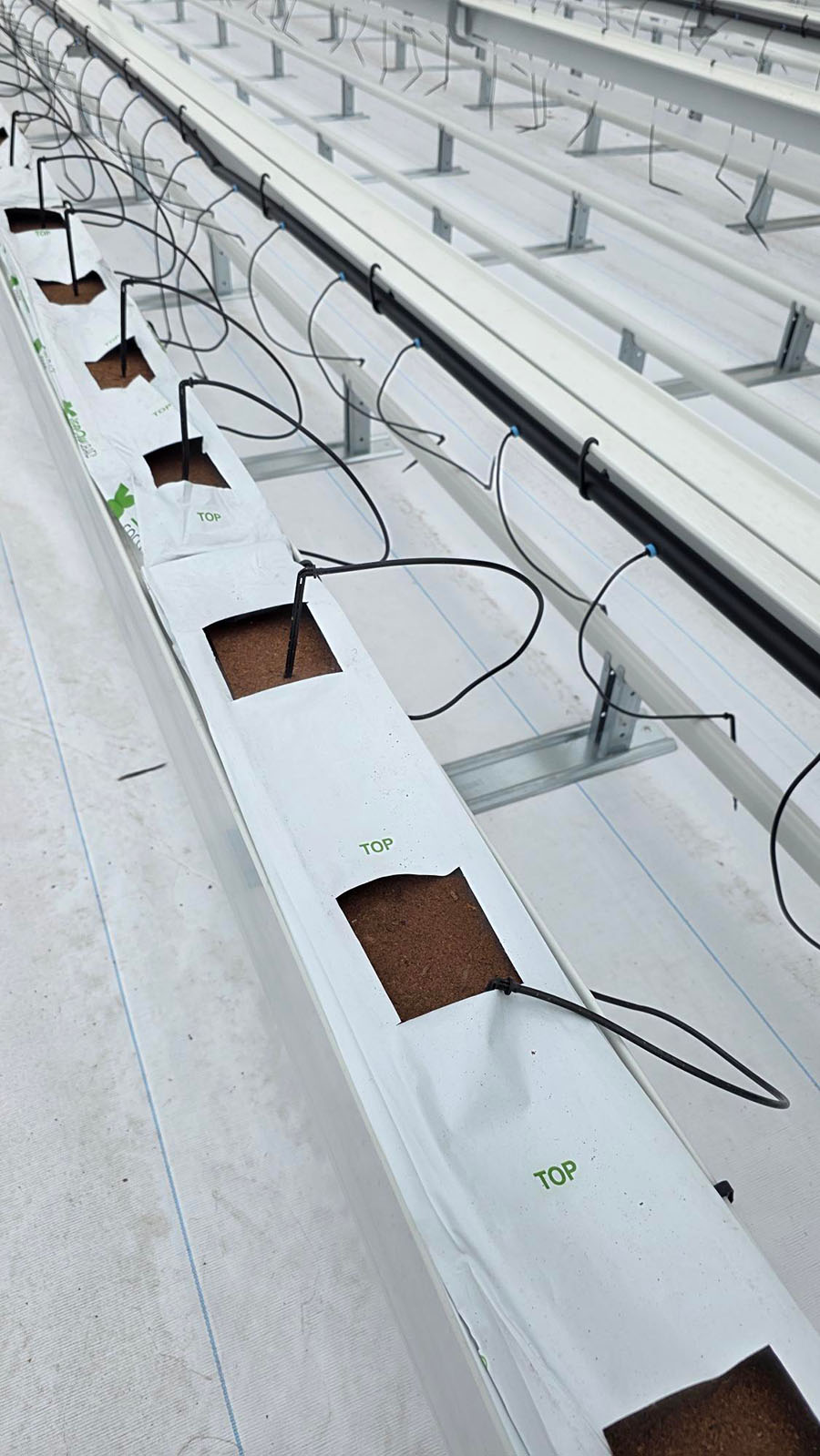
Physical composition is equally decisive. Growbag COCO can be produced using varying ratios of coir pith, coir crush and coir fibre. The most common mixes combine pith with crush fractions in either standard 0–15 mm or finer 0–7 mm grades. The proportion of crush directly influences the air–water balance: higher crush content increases air capacity and reduces water retention, resulting in a drier substrate that requires more irrigation during the day but allows faster dry-down and easier generative steering at night. Homogeneity of the substrate mix within the growbag and within a growbag batch is essential to ensure predictable irrigation behaviour and consistent crop development in the greenhouse.
Jan Vanoverschelde, Product Manager Growbags at Klasmann-Deilmann, emphasises that this consistency is central to professional cultivation. “Coir as a raw material is well known in horticulture. What matters for growers is the reliability of the mix, the stability of the chemical properties and the ability to configure the bag exactly to their cultivation system or offering good standards for every crop. That is where quality control and sourcing make the difference. Hence why Klasmann-Deilmann bases all its manufacturing processes on the strict RHP quality scheme for professional growing media.”
Growbag COCO is available in a wide range of formats, with lengths up to 120 centimetres, widths 20 centimetres and heights up to 15 centimetres. Plant holes can be pre-cut in the foil for easy transplanting of planter blocks, while plug systems can be accommodated with drilled holes in the slab. Dripper openings and diamond-shaped drainage holes can be integrated according to customer specifications, ensuring that irrigation and drainage remain fully aligned. The plastic cover, typically white on the outside and black on the inside to optimise temperature control and root-zone darkness, is available in different gauges with varying UV stability depending on crop cycle length.
Beyond technical configuration, supply security plays an increasingly important role. Klasmann-Deilmann has direct and exclusive access to extensive coco raw materials in India and Sri Lanka. Through its partnership with Shakti Cocos since 2020, the company operates with two specialised modern production facilities, securing long-term availability of high-quality coir. Its own activities in the countries of origin support quality assurance and contribute to raising standards for responsibly produced coir.
Growers working with Growbag COCO value the predictability in practice. Installation, saturation and rooting follow a clear and reliable process, allowing integration into existing greenhouse systems without fundamental changes to daily operations. Production results are reported as stable, with healthy root development and yields comparable to other established substrates.
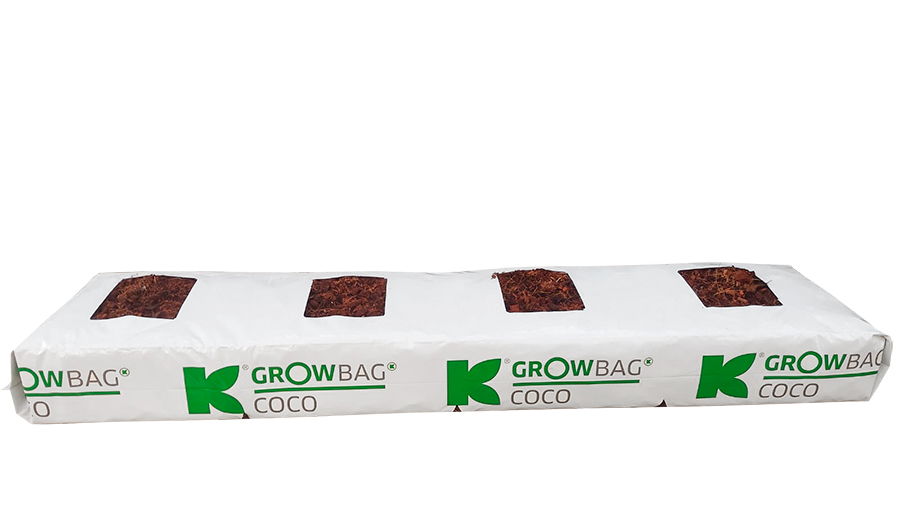
As commercial horticulture continues to professionalise and supply chains are scrutinised more closely, coir remains an important substrate option. With Growbag COCO, Klasmann-Deilmann focuses on securing premium raw material access, maintaining strict production standards and offering growers the flexibility to adapt the substrate to the specific needs of their crops and cultivation strategies.
For further information, please contact your local Klasmann-Deilmann representative or visit www.klasmann-deilmann.com.