- English

When temperatures rise in livestock housing, so does the risk of heat stress. Poultry and pigs are particularly sensitive to this, with major consequences for animal health, welfare and production results. Fancom helps livestock farmers to control the climate in their housing, even in extreme heat.
What is heat stress and how does it occur?
Heat stress occurs when high temperatures and humidity prevent an animal from regulating its body temperature. This has consequences for the health of the animals. It often occurs at high temperatures in combination with high or very low humidity and insufficient ventilation. Animals then start to change their behaviour: they eat less, pant more and move around much less. Heat stress costs energy and has a direct impact on performance.
Heat stress is a growing problem. Climate change and the increase in economic consequences make it increasingly important to take preventive measures.
Heat stress in poultry
Heat stress in chickens occurs at temperatures above 28 degrees in combination with high humidity. They try to lose body heat by spreading their wings and seeking coolness in the barn. They also breathe faster, which is visible as panting.
In these conditions, the animals eat less but drink more. If the heat persists, the body’s balance is disrupted: the acidity of the blood changes, minerals are excreted in larger quantities and liver enzymes may malfunction. This has negative consequences for growth and productivity and, in severe cases, can even lead to mortality.
Preventive ventilation and cooling are therefore essential. Fancom offers climate control systems that actively anticipate temperature fluctuations.
Fancom helps poultry farmers
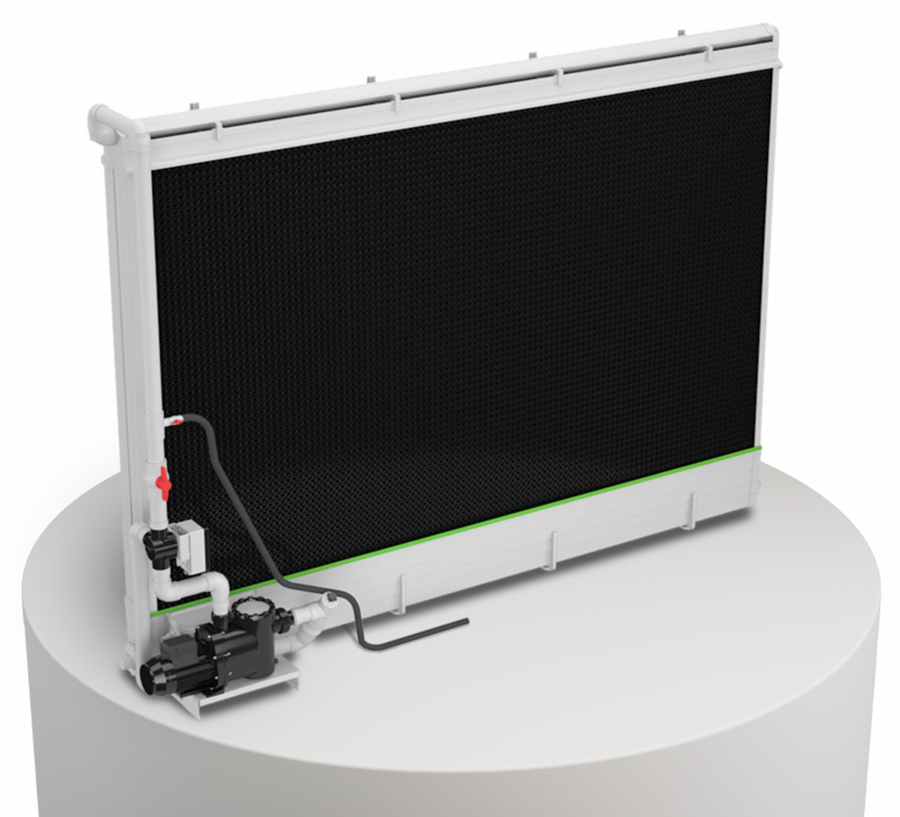
With smart ventilation systems, such as the Greenline pad cooling, we keep the barn climate under control.
Sows are particularly affected. They eat less, which causes them to lose condition, with all the consequences that entails. Their fertility declines and they produce less milk, which slows down the growth of the piglets.
But piglets and fattening pigs also suffer from high temperatures in the barn. They eat less and therefore do not get enough nutrients. This slows down their growth and causes feed conversion to deteriorate — so more feed is needed to achieve the same result.
A reliable climate control system prevents losses and ensures comfort.