- English

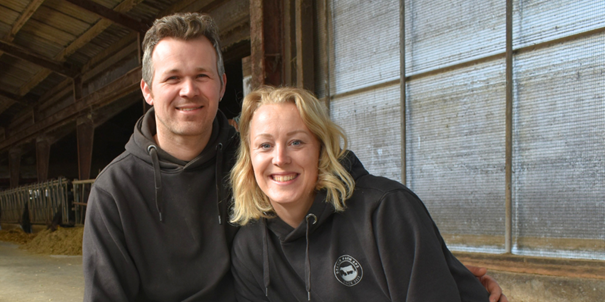
Lemming, Denmark – Two and a half years ago, Dave & Kelly Dekker and their family left the Dutch countryside for a farm in Denmark. The reason? Better prospects for their dairy farm and for the next generation. “We want our children to be able to take over the business. We are already six generations of dairy farmers,” says Dave.
Growth and optimization
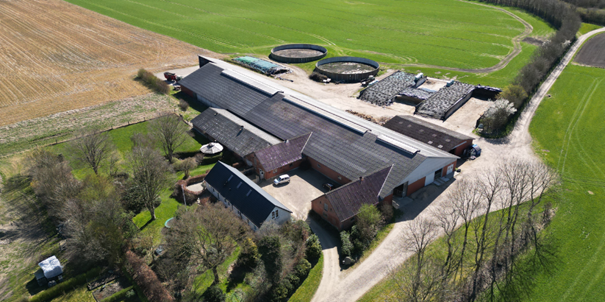
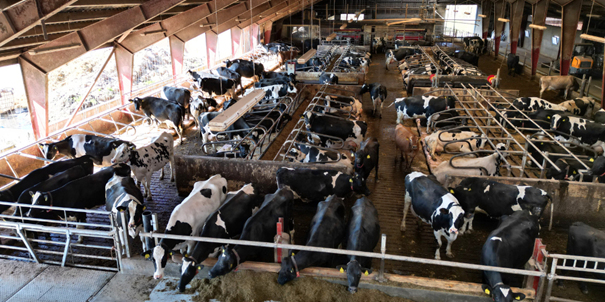
In the Netherlands, the Dekker family kept 60 dairy cows and 40 young cattle with access to pasture. In Denmark, they started with 92 dairy cows and 120 young cattle, milked by two robots. The farm has since grown to 140 dairy cows and 70-80 young cattle on 70 hectares of owned land.
The move to Denmark also brought new insights and improvements. “We started with Holstein, but due to new regulations we are now switching to Jersey. That fits better with the future of our farm.” Production has increased from 10,000 liters to 12,000 liters per cow per year, with higher fat and protein contents. “This is due to optimization, better management, roughage production, and care.”
“It’s a payback model: less milk loss, less labor, healthier cows, and a better start to the next lactation.”
This is a major advantage, especially in warm periods. “It saves labor, stress, and costs. Ultimately, we want to use it on every cow. It’s a payback model: less milk loss, less labor, healthier cows, and a better start to the next lactation.”
Recommendation for fellow farmers
Would Dave recommend StopLac to other dairy farmers? “Definitely. Especially for farmers who have difficulty with drying off or working with short calving intervals. The transition period is crucial, and StopLac makes it easier and more efficient. Why wouldn’t you do it?”
Vision for the future
Dave looks ahead: “In the future, we only want to use StopLac for drying off. We all have the same goal: optimization and healthy cows.”